
About:
Aquaculture is a strategic activity that significantly contributes to the maintenance of local economies, constituting an engine that generates wealth and employment on the coast.
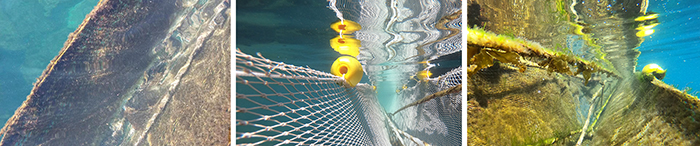
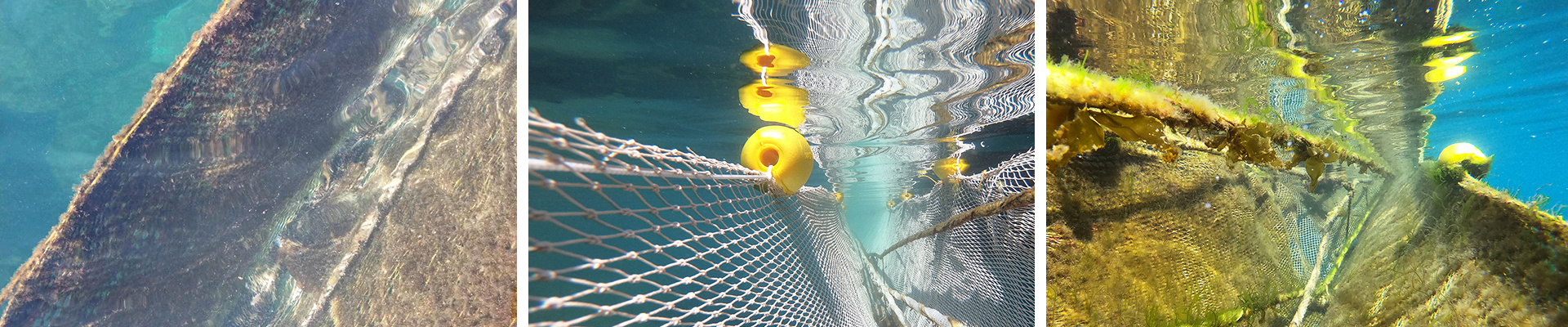
This productive sector resorts to the use of submerged production structures made up of more resistant and easy-to-handle materials. However, the fixation of organisms (fouling) in the structures and materials used in aquaculture is one of the critical factors in the profitability of fish production in oceanic cages as well as bivalves in longlines and on tables (oyster bags).
The weight on the aquaculture production infrastructure, resulting from the biomass incrusted in its surfaces (panels, bags, nets, ropes, lines and floats, among others) leads to increased production costs, since it requires a high level of hand labor for the maintenance/cleaning of structures and organisms and increases the time of each production cycle due to lower growth rates, also leading to material loss (deformation, structural fatigue). On the other hand, incrustations lead to changes in the field of currents, reducing the renewal of water within the production systems, leading to high mortality rates and low growth rates for bivalves.
The occurrence of this problem in the aquaculture industry is a priority concern of the sector, enormously increasing production costs, thus limiting the profitability and expansion of this economic activity.
In this context, this project aims to contribute to support aquaculture, helping to define sustainable, non-toxic antifouling technology, capable of preventing or mitigating the biofouling that is deposited on the surfaces of cages, nets, longlines and other submerged aquaculture equipment
A aquicultura é uma actividade estratégica que contribui de forma significativa para a manutenção das economias locais, constituindo um motor gerador de riqueza e emprego no litoral.
Este sector produtivo recorre à utilização de estruturas de produção submergidas constituidas por materiais mais resistentes e de fácil maneio. No entanto, a fixação de organismos (incrustação, “fouling”) nas estruturas e materiais utilizados em aquicultura constitui um dos factores críticos na rentabilização da produção de peixe em jaulas oceanicas e de bivalves em longline e em mesas (sacos ostreícolas).
O peso sobre a infraestrutura de produção aquícola, decorrente da biomassa incrustada nas suas superfícies (painéis, sacos, redes, cordas, linhas e flutuadores, entre outros) conduz a custos de produção acrescidos, uma vez que requer uma elevada mão-de-obra para a manutenção/limpeza das estruturas e organismos e aumenta o tempo de cada ciclo de produção devido às menores taxas de crescimento, conduzindo ainda à perda de material (deformação, fadiga estrutural). Por outro lado, as incrustações conduzem à alterações no campo das correntes, reduzindo a renovação da água no interior dos sistemas produtivos, conduzindo a elevadas taxas de mortalidade e a baixos índices de crescimento dos bivalves.
A ocorrência deste problema na indústria da aquicultura/moluscicultura é uma preocupação prioritária do setor, aumentando enormemente os custos de produção, limitando desta forma a rentabilidade e expansão desta actividade económica.
Neste contexto, este projeto pretende contribuir para suportar a aquicultura, ajudando a definir tecnologia antivegetativa sustentável, não-tóxica, capaz de prevenir ou mitigar a bioincrustação que se deposita nas superfícies das jaulas, redes, longlines e demais equipamentos aquícolas submersos.